Investing in jobs, economic growth, and infrastructure for Salem — and for the Pacific Northwest grid.
Oakline at Mill Creek is a proposed data center campus designed specifically for its setting in Salem’s Mill Creek Corporate Center. Developed by Verrus™, the project pairs next-generation digital infrastructure with thoughtful architecture, native landscaping, and preservation of the site’s Heritage Oak trees.
Unlike conventional data centers, Oakline is designed to support regional grid reliability, conserve water, operate quietly, and contribute to Salem as a responsible long-term neighbor from day one.
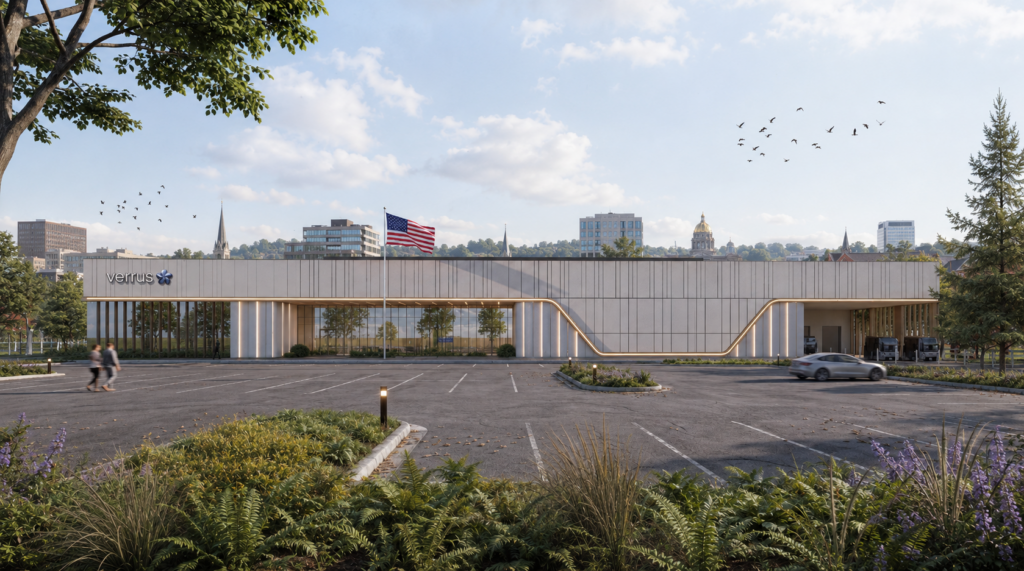
Digital rendering shown for illustrative purposes only – subject to change.
Oakline at Mill Creek
See how Oakline at Mill Creek is raising the standard for community-minded data center design.
Preserving Heritage Oaks and fitting naturally into the Salem landscape.
We are deeply committed to preserving the natural heritage and surrounding landscapes of all our campuses. Our facilities feature low-impact exterior lighting to protect dark night skies, thoughtful architecture, and native landscaping that seamlessly blends into the environment.
At Oakline, this philosophy is put into direct action: we are preserving 100% of the on-site Heritage Oak trees, permanently protected through a conservation easement we proudly acquired. By prioritizing sustainability, we ensure our presence honors and safeguards the local ecosystem.
Investing in the communities where we build.
We aren’t just developers; we are long-term neighbors. Our goal is to collaborate closely with residents to ensure this campus truly serves the community and addresses what matters most to residents. Oakline also represents a generational investment in Salem’s future, strengthening the local tax base to support schools, infrastructure, and first responders. Beyond tax revenue, Verrus is dedicated to partnering with the community to fund targeted initiatives that enrich everyday life.
Designed to use far less water than legacy cooling.
Conventional data centers can use very high volumes of water for cooling, often evaporating millions of gallons daily. This project uses a proven closed-loop cooling system that continuously recirculates water rather than evaporating it. The result is significantly lower water consumption for the campus: much less than an average 18-hole golf course, or about as much as just a few sit-down restaurants. This represents significantly lower water consumption than legacy data center cooling approaches — a meaningful design choice in a region where water preservation is a community priority.
Modern equipment designed to be a quiet neighbor.
The project uses modern, low-noise cooling equipment and battery storage for primary backup power. The facility is being designed to comply with all applicable City of Salem noise standards, including nighttime thresholds. Minimizing impacts on neighboring properties and uses has been a priority in the facility design since day one.
Significantly lower emissions with clean technology.
With a battery-first backup design, this facility is designed to reduce the routine operational air emissions associated with the diesel generators serving as primary backup power for conventional data centers. That’s consistent with Oregon’s clean energy values and our commitment to being a responsible community member.
A shock absorber for the grid — not a strain on it.
Unlike traditional data centers that draw power continuously, this facility will dynamically reduce energy when the grid is most stressed. Verrus closely coordinates with its utility partners to reduce strain during peak demand and make better use of the existing systems. Better utilizing the current grid reduces the need for expensive new generation and transmission projects, ultimately lowering utility rates for all ratepayers.
Open dialogue. Ongoing accountability.
Verrus commits to NDA-free relationships with local governments and agencies, and continuous open-door dialogue with community members. Every campus maintains a community-facing monitoring website, for the life of the project, where residents can track noise levels, water usage, and tax contributions, and hold Verrus to its commitments.
Overview
A better data center — for Salem and the Pacific Northwest grid.
Oakline at Mill Creek is a proposed data center campus in Salem’s Mill Creek Corporate Center, at the intersection of Turner Road SE and Deer Park Drive SE. The facility will consist of three buildings and a utility substation designed to support cloud computing, artificial intelligence, and enterprise services.
The campus is designed to meet or exceed all applicable local, state, and federal environmental standards while blending thoughtfully with the local landscape. It is being developed in coordination with both Portland General Electric and with the City of Salem’s land use process.
Salem and communities across the Pacific Northwest are experiencing growing pressure on the power system — from wildfire-driven disruptions to drought conditions and the rapid expansion of the digital economy. This project is designed to serve as a resource, not a strain, to the grid and all who rely on it.
Oakline is being developed with the support of SEDCOR (the Strategic Economic Development Corporation) as a community economic development partner. Verrus is committed to being a long-term economic contributor to Salem and Marion County.
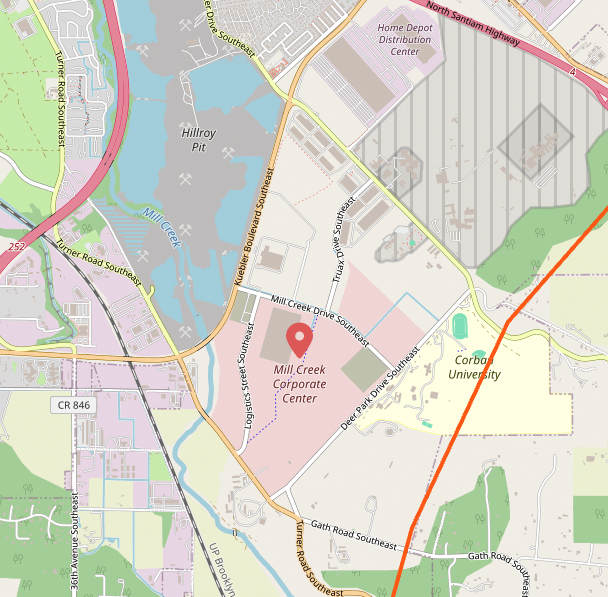
Mill Creek Corporate Center
Salem, OR
Oakline at Mill Creek
A long-term investment in Salem and Marion County.
Oakline represents a substantial, long-term capital investment in Salem’s economy. Verrus is committed to being a durable economic presence in the community, not a short-term project. The facility will generate economic activity across construction, continuing operations, and the broader local economy for years to come.
The project is expected to generate over one thousand local construction jobs across multiple trades and multiple years of development. Consistent with Oregon’s requirements, this work will be performed at prevailing wage rates, supporting quality, family-wage employment.
When fully operational, the campus will support well-paying, permanent full-time positions in technical, operational, and support roles. Verrus plans to work with local employment agencies, community colleges, and trade organizations, including partners coordinated through SEDCOR, to prioritize local and regional hiring.
Construction workers and permanent employees will be spending time in Salem — supporting local restaurants, vendors, and small businesses throughout the construction and operating life of the project. Oakline expects to make significant purchases of goods and services from local businesses, extending economic benefits well beyond the site itself. Interested individuals and businesses can register their interest on this website, and we will reach out as career fairs and procurement opportunities become available.
FAQ
Start with the facts. Here are the questions we hear most.
Oakline is a proposed next-generation data center campus in Salem’s Mill Creek Corporate Center, developed by Verrus. The facility will consist of three buildings and a utility substation. Unlike legacy data centers, it is designed to support the local power grid, conserve water, minimize noise, and contribute meaningfully to the community and economy over the long term.
The name reflects both the place and the principles guiding the project. “Oakline” refers to the oak trees and conservation areas we are committed to preserving on site, as well as the walking paths and trail connections planned within those preserved spaces. “Mill Creek” recognizes the project’s location in the Mill Creek Corporate Center, a corridor that has been part of Salem’s economic landscape for more than two decades. We chose a name that signals our intention to blend infrastructure with environmental stewardship and to be a responsible neighbor from day one.
Yes. The Mill Creek Corporate Center is zoned Employment Center (EC) under the City of Salem’s code. Data centers are an outright permitted use in the EC zone. No rezoning is required. The project is going through the City’s standard Site Plan Review process — the same process used for other commercial and industrial development in Salem.
Verrus is committed to protecting water and other natural resources. Oakline uses a closed-loop cooling system that continuously recirculates water rather than evaporating it into the atmosphere. This design uses significantly less water than legacy data center cooling systems, which can consume enormous volumes through evaporative towers.
Responsible water use is a core engineering principle for this project. We will provide more specific figures as the design is finalized.
No — it’s designed to do the opposite through two distinct capabilities. First, the facility can reduce its power draw during periods of peak grid stress, acting as a demand-response resource for Portland General Electric (a capability validated in a study conducted with the National Lab of the Rockies) Second, for continuous, second-by-second reliability, our proprietary StabiliGrid™ technology uses onboard energy storage to act like an electrical shock absorber, instantly smoothing out local voltage ripples to prevent neighborhood power disruptions.
Verrus and its development partners will also pay directly for any infrastructure upgrades needed to serve the facility, and will share in the ongoing cost of maintaining the grid, benefitting all PGE customers.
The project is designed to be a quiet neighbor. We use state-of-the-art, low-noise cooling equipment and battery storage rather than diesel generators for primary backup power. The facility is being designed to comply with all applicable City of Salem noise standards, including nighttime thresholds.
Minimizing noise impacts on adjacent properties and institutions is a specific design priority. Site-specific noise study findings will be shared as the design is finalized.
Yes. Safety is a core part of the design. Verrus’ battery systems use lithium iron phosphate (LFP) chemistry — widely recognized as one of the most stable and thermally safe battery technologies available, and the most commonly used for large-scale storage applications across the US. LFP batteries have an established safety record in grid-scale installations across the country.
The systems incorporate multiple layers of fire detection, suppression, and safety monitoring, and are monitored continuously by automated systems. The campus layout and emergency access plan are developed in coordination with the City of Salem and local fire authorities to ensure safe access to all areas of the site.
No. Research by the George Mason University Schar School of Policy and Government found that data center development does not negatively affect residential property values. In many cases, nearby property values improved — reflecting the positive economic activity and investment in infrastructure and schools that major commercial development brings to a community.
The data center technology and development company, Verrus, was founded to reinvent the legacy data center model to serve as a better partner to communities, utilities, and the environment.
We want to hear from the community. Use the contact form below to sign up for project updates, ask questions, or share your perspective. A member of the Verrus team will follow up directly.
CONTACT US
© 2026, Verrus, LLC. All rights reserved
Project details, timelines, projected benefits, and financial estimates are subject to change based on ongoing development activities, permitting processes, and regulatory requirements.